Buying a first investment property can feel like the biggest step in real estate. In many ways, it is. But the real challenge begins after that first purchase: how do you move from owning one property to building a sustainable investment portfolio?
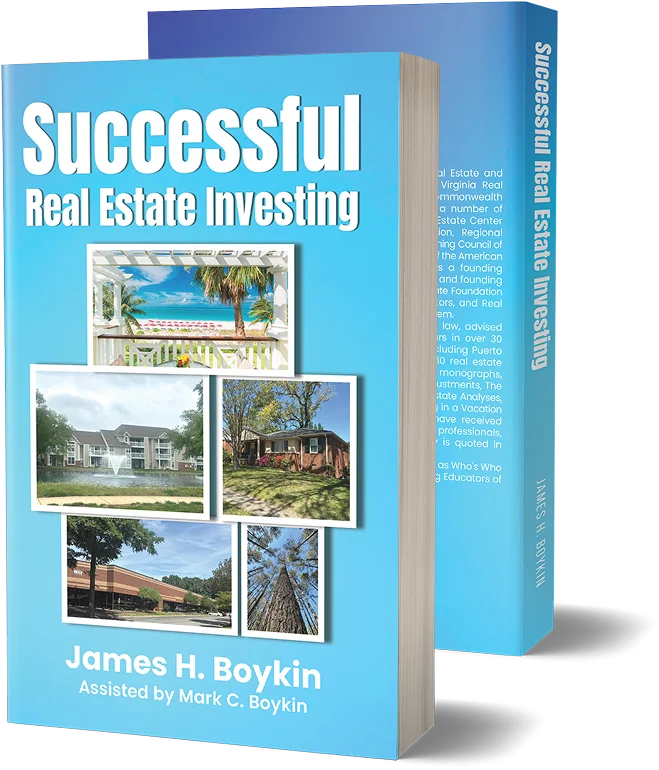
In Successful Real Estate Investing, author James H. Boykin presents real estate as a discipline built on sound decisions, careful analysis and risk management. The goal is not simply to accumulate properties. It is to acquire assets that make financial sense, fit your objectives and strengthen your overall position over time.
Start With Clear Investment Goals
A portfolio should not grow randomly.
Boykin encourages investors to define what they want real estate to accomplish before committing capital. One investor may prioritize rental income. Another may focus on equity growth, tax advantages or long-term appreciation. Others may want diversification across different property types.
Those goals matter because they influence what you buy next.
A small apartment building, passive real estate investment, vacation property, house flip or timber tract can serve very different purposes. Building a portfolio intelligently means choosing investments because they support a strategy, not simply because another property becomes available.
Make the First Purchase a Learning Experience
Your first property can teach lessons no spreadsheet can fully provide.
You begin to see how projected expenses compare with actual expenses. You learn the real cost of vacancies, maintenance, financing, insurance and property management. You also discover how comfortable you are with debt, tenant responsibilities, renovations and unexpected problems.
Boykin repeatedly stresses the importance of conservative assumptions and adequate reserves. Investors who overestimate rents or underestimate costs can quickly find that an investment performs very differently from the original forecast.
Before expanding, understand what your first investment is telling you.
Let Financial Analysis Guide Expansion
Owning more properties does not automatically mean creating more wealth.
Each acquisition should be evaluated on its own merits. Boykin discusses financial measures including capitalization rate, debt coverage ratio, operating expense ratio and equity-to-value ratio as tools for assessing potential investments.
As a portfolio grows, these numbers become even more important. One weak acquisition can drain cash from stronger properties, while excessive borrowing across several investments can magnify financial pressure.
The smarter objective is not more doors at any cost. It is a collection of investments with manageable risk and realistic earning potential.
Diversify With Purpose
Boykin’s book explores a wide range of real estate strategies, including passive investing, flipping houses, small apartment properties, condominium conversions, flex space, vacation homes and timberland.
That range demonstrates an important portfolio principle: real estate does not have to mean owning multiple versions of the same property.
Diversification may provide access to different sources of income and different market dynamics. But investors still need to understand each asset before adding it to their portfolio. Diversification should reduce dependence on a single strategy, not become an excuse to invest in unfamiliar deals.
Grow at the Speed of Your Experience
Building a real estate portfolio is not a race.
Strong investors develop systems, preserve reserves, understand financing, learn from each acquisition and become increasingly selective rather than increasingly impulsive.
That disciplined progression is central to Successful Real Estate Investing by James H. Boykin. The book provides a practical framework for finding properties, analyzing opportunities, negotiating, financing, managing risk, generating income and eventually selling for profit.
The journey from one property to a portfolio is not about buying faster. It is about making each new investment smarter than the last.