Not every real estate investor wants to screen tenants, coordinate repairs, negotiate leases or take calls when something breaks. For people who want exposure to real estate without becoming hands-on landlords, passive investing can be an appealing alternative.
But convenience comes with trade-offs.
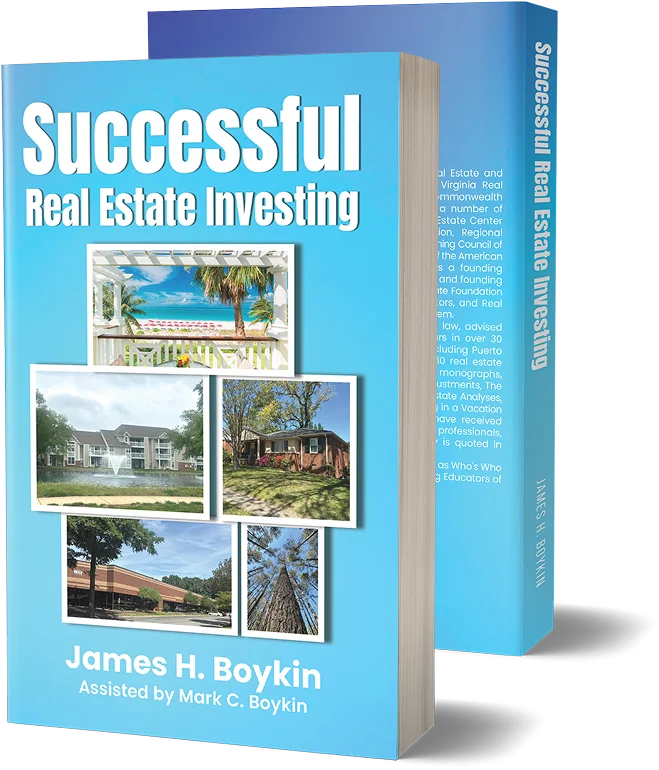
In Successful Real Estate Investing, author James H. Boykin explains that passive real estate investing can offer investors access to professionally managed properties, portfolio diversification and potentially greater liquidity than direct ownership. At the same time, passive investors often surrender something important: control.
What Makes an Investment “Passive”?
In a direct real estate investment, the owner may be involved in selecting the property, arranging financing, approving repairs, choosing tenants, setting rents and deciding when to sell.
A passive investor generally gives much of that responsibility to someone else.
Boykin discusses structures that can include real estate funds, exchange-traded funds, REITs and other professionally managed investments. These options can allow investors to participate in real estate without personally managing individual buildings.
That convenience can be especially attractive to investors who lack the time, experience or desire to operate properties themselves.
Diversification Can Be a Major Advantage
Buying one rental property concentrates a significant amount of capital in a single asset and location.
Passive investments may provide exposure to multiple properties, markets or property types. Instead of relying on the performance of one apartment building or commercial property, an investor may be able to spread risk across a broader portfolio.
Boykin identifies diversification as one of the potential advantages of passive investing, along with professional management and, in some structures, greater liquidity.
For investors who want real estate exposure without putting most of their capital into a single property, that can be meaningful.
Convenience Does Not Eliminate Risk
The word “passive” should never be confused with “risk-free.”
An investor may not be responsible for fixing a roof or collecting rent, but the underlying properties can still experience vacancies, declining values, rising expenses, financing problems or weak management.
Boykin encourages investors to carefully examine offering materials and understand how an investment is structured before committing capital. Passive investors should know who manages the investment, what fees are charged, how returns are distributed and whether additional capital contributions could be required.
A professional manager can reduce an investor’s workload, but professional management does not guarantee strong performance.
Understand How Returns Are Measured
Boykin also introduces measures commonly used to evaluate passive real estate opportunities, including cash-on-cash return, equity multiple and internal rate of return. These figures can help investors compare potential opportunities, but no single metric should be considered in isolation.
The quality of the underlying properties, management team, financing, fees, investment period and exit strategy all matter.
What Do You Give Up?
The biggest compromise may be decision-making authority.
Passive investors typically have less influence over which properties are purchased, how they are managed, how much debt is used or when assets are sold. In exchange, they gain freedom from many day-to-day responsibilities of direct ownership.
Neither approach is automatically better. The right choice depends on an investor’s goals, available capital, experience, time and desire for control.
That balanced perspective is a recurring strength of Successful Real Estate Investing. James H. Boykin helps readers understand not only how real estate can generate returns, but also the responsibilities and risks that come with different investment strategies.
Passive real estate can make investing more convenient but informed investors understand exactly what they gain and what they give up.