When investors evaluate a real estate opportunity, their attention often goes straight to the purchase price, expected rent and potential appreciation. Financing can feel like something to figure out after the property itself has passed the test.
But the mortgage structure can have a major influence on whether an investment continues to produce healthy cash flow years after closing.
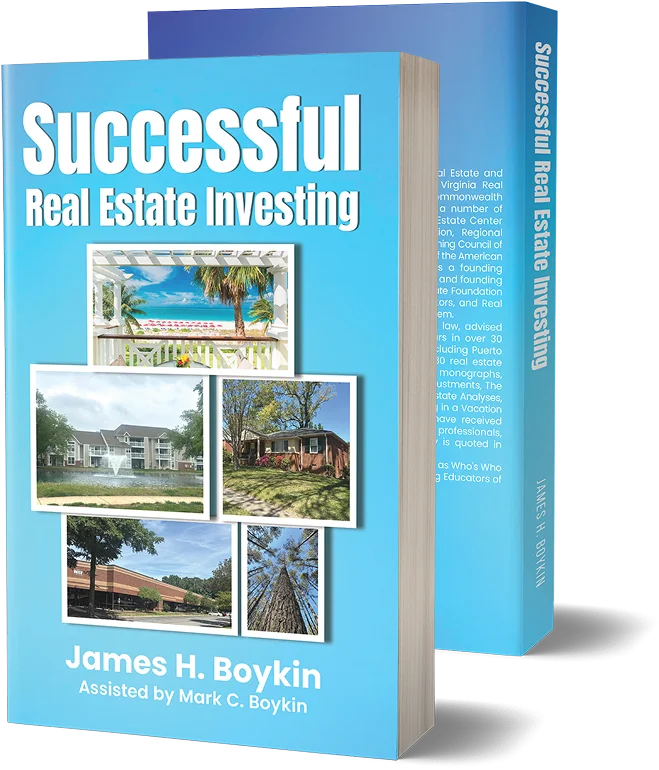
In Successful Real Estate Investing, James H. Boykin explores the choice between fixed-rate and adjustable-rate financing and explains why predictability can become especially valuable when market conditions change.
A Lower Rate Today May Not Stay Low Tomorrow
Adjustable-rate financing can initially appear attractive.
If the starting interest rate is lower than the rate available on a fixed mortgage, an investor may see smaller payments and stronger cash flow in the early years. That can make the deal look better on paper.
The problem is that the numbers may not stay the same.
Boykin warns about the risks associated with short-term loans carrying variable interest rates. If mortgage rates rise while occupancy weakens or operating expenses increase, an apparently successful investment can quickly become much more difficult to carry.
Real estate investors therefore need to think beyond the first payment.
The important question is not simply, “What will this loan cost me today?” It is also, “What happens to my investment if borrowing costs increase later?”
Certainty Makes Cash Flow Easier to Plan
One of the strongest advantages of fixed-rate financing is predictability.
Boykin notes that there is significant value in certainty when it comes to mortgage rates because predictable financing expenses can support predictable positive cash flow.
Rental property already comes with plenty of variables.
A tenant may leave unexpectedly. Repairs may cost more than anticipated. Property taxes and insurance can increase. A building may need improvements sooner than expected.
When mortgage payments are also changing, investors have yet another major expense they cannot fully control.
A fixed rate does not remove property risk, but it can remove one important source of uncertainty.
Rising Rates Can Put Equity Under Pressure
The danger becomes more serious when an investment is highly leveraged.
Boykin explains that leverage magnifies both positive and negative financial outcomes. Higher debt can improve returns on initial equity when everything performs as expected, but it also leaves less room for vacancies, rising expenses and other financial pressures.
If an adjustable loan resets at a higher rate, annual debt service rises. That means more rental income must be dedicated to financing before the investor sees positive cash flow.
The book describes how rising refinancing costs can reduce an investor’s equity position and, when combined with variable-rate short-term debt and weak underwriting, may ultimately contribute to foreclosure.
Look Beyond the Interest Rate
Choosing between fixed and adjustable financing should therefore involve more than comparing two percentages.
Investors should consider the loan term, expected holding period, property income, vacancy risk, operating expenses, debt level and their ability to absorb higher future payments.
A lower introductory rate may save money today. A predictable payment, however, may provide something equally valuable: financial stability.
Financing Should Support the Investment
Successful Real Estate Investing by James H. Boykin encourages readers to look at real estate as a complete financial decision rather than focusing on one attractive feature of a deal.
The right mortgage should not simply help you purchase the property. It should help you continue owning it successfully when conditions become less favorable.
For many investors, certainty may therefore be worth more than it first appears.
Discover more practical guidance on financing, leverage, property analysis, risk and long-term investment strategy in Successful Real Estate Investing by James H. Boykin.
Read the book on Amazon: https://a.co/d/0gjvN7zf