Real estate investing does not always mean buying a property, finding tenants, arranging repairs and managing leases yourself.
Investors can participate in real estate in very different ways. Some prefer direct ownership because they want control over the property and its decisions. Others would rather invest through professionally managed funds, REITs or similar vehicles and avoid the day-to-day responsibilities of property ownership.
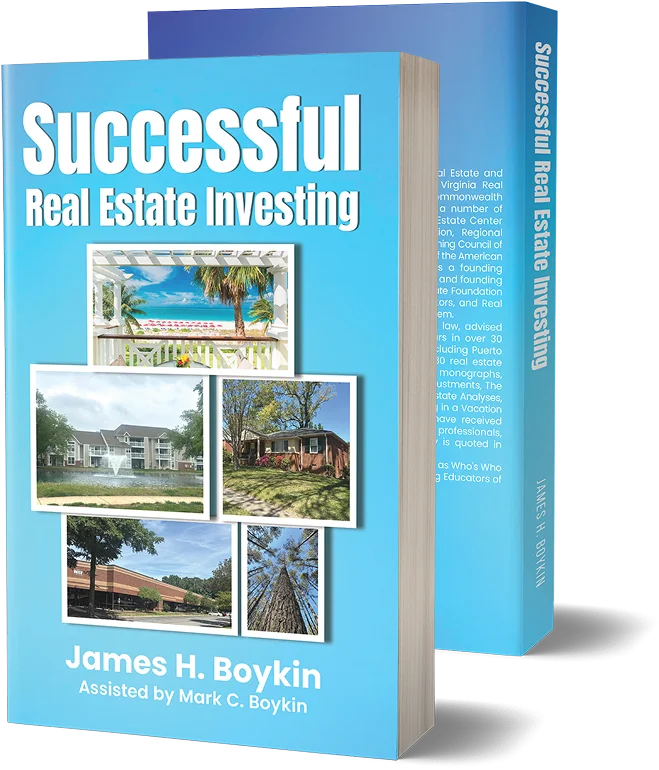
In Successful Real Estate Investing, James H. Boykin explores both active and passive approaches, helping readers think about an important question: How involved do you actually want to be?
Direct Ownership Gives You More Control
With direct ownership, you purchase and control the property yourself.
That can be appealing because you have a say in financing, improvements, tenant selection, leasing, management and the timing of a future sale. You may also benefit directly from rental income, appreciation, mortgage amortization and available tax treatment.
However, greater control comes with greater responsibility.
Direct investors must locate suitable properties, analyze them, arrange financing, deal with maintenance, manage tenants, monitor expenses and eventually handle the sale. Boykin makes clear throughout the book that these responsibilities require knowledge, time and careful decision-making.
Passive Investing Reduces the Management Burden
Passive investing takes a different approach.
Boykin explains that passive investors transfer much of the responsibility for locating, researching, acquiring, financing, managing and selling real estate to professional organizations. In return, investors may receive periodic distributions and eventual proceeds from the sale of the underlying assets.
The obvious advantage is convenience.
You do not have to take calls from tenants, schedule repairs, negotiate leases or personally manage mortgage payments and property operations. Boykin also notes that passive investing can eliminate much of the time-consuming search and screening involved in finding a suitable property.
But giving up responsibility also means giving up some control.
Where Do REITs and Funds Fit In?
The book discusses several passive investment vehicles, including real estate mutual funds, exchange-traded funds and Real Estate Investment Trusts, commonly known as REITs.
Real estate ETFs can provide exposure to multiple real estate assets within a single investment. Boykin notes that this diversification can reduce the risk associated with putting all of an investor’s capital into one property. ETFs may also offer geographic and property-type diversity while freeing investors from direct management duties.
REITs offer another route. According to the book, they can provide access to categories ranging from storage and timberland to data centers and other specialized property sectors.
Real estate mutual funds can similarly hold multiple real estate-related assets, spreading exposure across a broader portfolio.
Passive Does Not Mean Risk-Free
Convenience should never be confused with certainty.
Boykin points out that passive investors may face illiquidity, market disruptions, tenant problems, financing challenges, competition and the possibility of losing some or all of their investment.
Investors also give up the direct control and pride of ownership that come with personally managing a property.
That trade-off matters.
Choose the Approach That Fits You
There is no universal answer to whether direct ownership, REITs or real estate funds are better.
The right choice depends on your available capital, experience, tolerance for risk, desire for control and willingness to manage property yourself.
Successful Real Estate Investing by James H. Boykin helps readers understand those choices rather than treating real estate investing as a single strategy.
Before deciding where to invest, ask yourself one practical question:
Do you want to own real estate or do you simply want exposure to real estate returns?
Discover more practical guidance on direct and passive real estate investing in Successful Real Estate Investing by James H. Boykin.
Read the book on Amazon: https://a.co/d/0gjvN7zf